Hearing from authors might not be the first idea that comes to mind when you start brainstorming ideas on the topic of improving reading outcomes. The focus is often on curriculum, assessments, or interventions. Hearing from authors is one proven strategy that often gets overlooked. When students meet the person behind the book, a shift takes place. They stop seeing books as an assignment, and start seeing them as a way to connect and have a conversation. A sense of purpose and meaning begins to shape how they choose books, rather than choosing the same one over and over, randomly plucking one off the shelf, or choosing the skinniest one they can find.
Let’s explore how hearing from authors in your school could transform the reading experience, strengthen motivation, build reading stamina, and begin to create the true culture of reading we all dream of.
Connecting the Reading Experience Back to the Author
How do many students see books? Assigned. Measured by length. Connected to a book report, one-pager, or a quiz.
However, when students get a peek behind the scenes into the author’s writing process, it changes how they see books entirely. When students have heard from authors built into their regular routines at school, they learn that writing is messy. They find out that stories began with an experience, a question, or learning that no one else had written the book they needed as a child. As a result, students begin to understand that books come from lived experiences, curiosity, and perseverance.
Instead of viewing a book as an assigned number of pages to get through, students begin to see the person behind the words. They hear about the stories that didn’t get published, the drafts that went straight to the trash, and the real-life inspirations that keep authors going. This type of interaction with authors matters because connection fuels engagement, which is the key to all the learning that we hope will take place as students read.
Choosing a Book…and the Motivation to Finish It
Reading stamina is often misunderstood. It is not simply how long a student can sit quietly with a book. We’ve all had those students that can stare at their books for the whole 30 minutes, but they don’t ever turn a page. True reading stamina reflects how much time a student is willing to spend with a book, and whether they choose to stick with it to the end.
According to the Scholastic Kids & Family Reading Report, approximately 90% of children (9 in 10) report they are more likely to finish a book if they have picked it out themselves. And that same research goes on to say that 89% of children agree that the books that became their favorites are the ones they’ve personally selected.
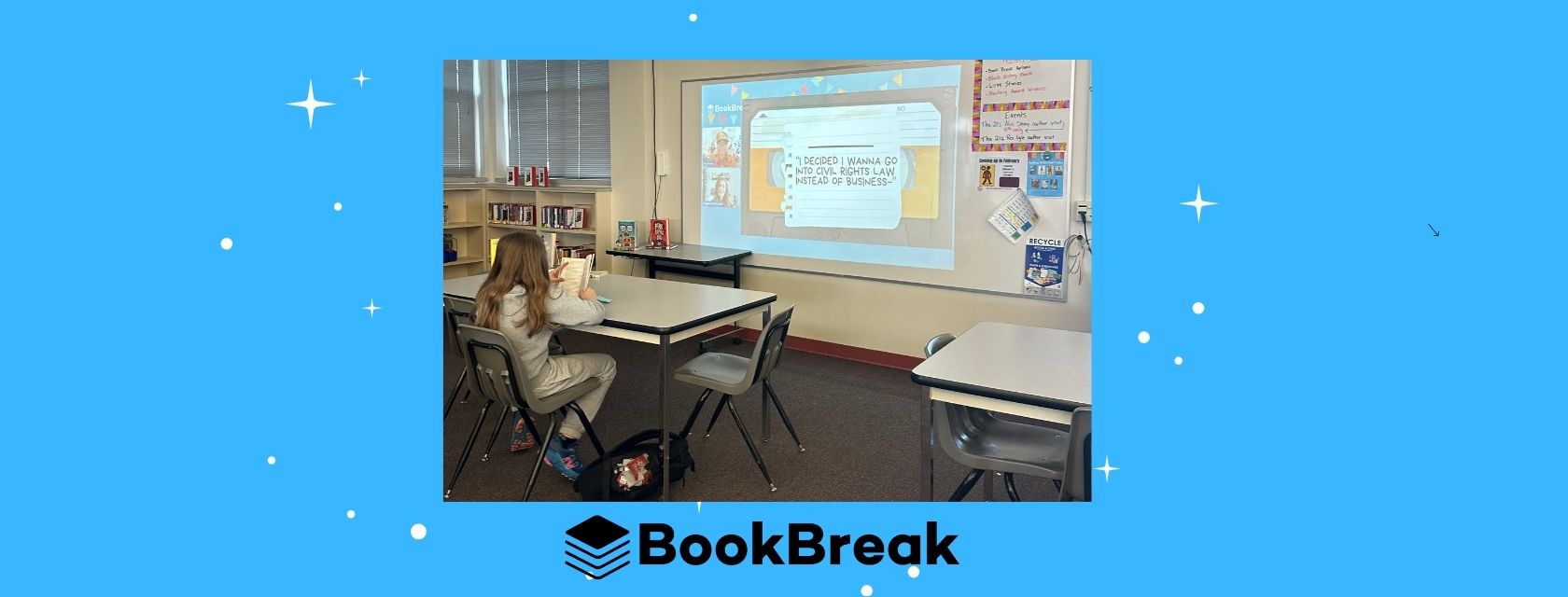
After a recent author visit with Rex Ogle, a middle school librarian from CS Porter Middle School reported the following experience:
“After hearing Kaylyn read the first part of Free Lunch out loud during World Read Aloud Day, a sixth grader checked that book out. She came back after a few days and proudly told me it was the first book she had finished all year and she read it in two days. She wanted the rest of his memoir series. She wanted to “hear the whole story” and had questions ready to ask Rex as the author visit got closer. This book had become more than a book to her, it had become a shared experience.”
Hearing directly from the author was a powerful experience for this student. She was driven to not only finish one book, but wanted to read everything she could find from the author she knew was going to be there for the upcoming virtual author visit. Hearing from the author for this student was a total game-changer, and this is just one of many stories like this!
Strengthening Student Motivation for Reading and Writing
When students meet the person behind the book, their motivation often expands beyond reading alone. Hearing from authors is meaningful for students, and they begin to see writing as something people do, not just an assignment to complete for a grade. Authors often share early drafts, rejected ideas, and the countless revisions that shape the final story. This give students a picture into the persistence, curiosity, and creativity that are part of the process, rather than instant perfection.
This connection is powerful. When students feel inspired by the story behind the book, they become more motivated to tell stories of their own.
From Passive Readers to Active Participants
In addition to building motivation and stamina, hearing from authors in schools invites students to become active participants in the books they read. Students ask questions. They connect the author’s experiences to their own lives.
The same middle school librarian from CS Porter Middle School also reported that another student told her that after reading just the first few pages of Four Eyes, also by Rex Ogle, he had “never felt so seen” and wanted to put the second book in that series on hold so he could read it as soon as he finished Four Eyes. Hearing from authors gave students that personal connection and helped that student to see that he was not alone in his middle school experiences. There was an author who had lived through it and gone on to tell the story.
This student is just one example of how seeing themselves reflected in the books they read changes how they decide to participate in the reading process. Students move from passive readers to thoughtful participants. The messages from that story become an internal dialogue. Students can begin to believe that their thoughts, questions, and perspective carry value.
That belief will strengthen them as both a reader and a writer.
How Hearing from Authors Helps Create a Culture of Reading
It is a teacher and librarian’s dream that conversations about books happen all day, every day. We would love to overhear these conversations in the hall, out at recess, or at the lunch table.
Hearing from authors can help make that possible. When students hear directly from the author, it gives them something to talk about beyond the walls of the classroom or library. Suddenly, reading is not just one part of their day or something they have to do when they’ve finished all their work. It is part of school culture.
Author visits open the door to talking about stories, finding ways to identify with others and their experience, beyond the structured prompts in the classroom. Students will hear about bravery, hardship, humor, and creativity. So then they will begin talking about bravery, hardship, humor, and creativity. They will recommend books to their friends. They will search for more books by that same author. They will ask their librarian for a suggestion of a book that is similar.
In short, hearing from authors in schools extends reading beyond assignments and into a shared community experience.
How BookBreak Makes Hearing From Authors Possible
At BookBreak we believe that hearing from authors in schools should be consistent, interactive, and sustainable. That is why BookBreak provides students with monthly access to authors through live, virtual events. These events are also accessible to watch as recordings after the live event is over. In addition, educators receive standards-aligned lesson plans, discussion guides, and ready-to-use resources that make implementation simple. Students will benefit from direct access to authors and teachers and librarians will gain tools that support instruction and strengthen a culture of reading across the school.
Browse our samples and request a demo! You’ll start to see how we can support hearing from authors in your school.
Hearing From Authors is More Than an Author Visit
When you give students the opportunity to hear from authors in your school, you’re giving them more than a special event. You’re connecting them to stories. You’re connecting them to each other. You’re motivating them to choose books and giving them the confidence to finish them.
Most importantly, you’re helping them read not because they have to, but because they want to. Doesn’t that sound magical?
Stay Tuned…