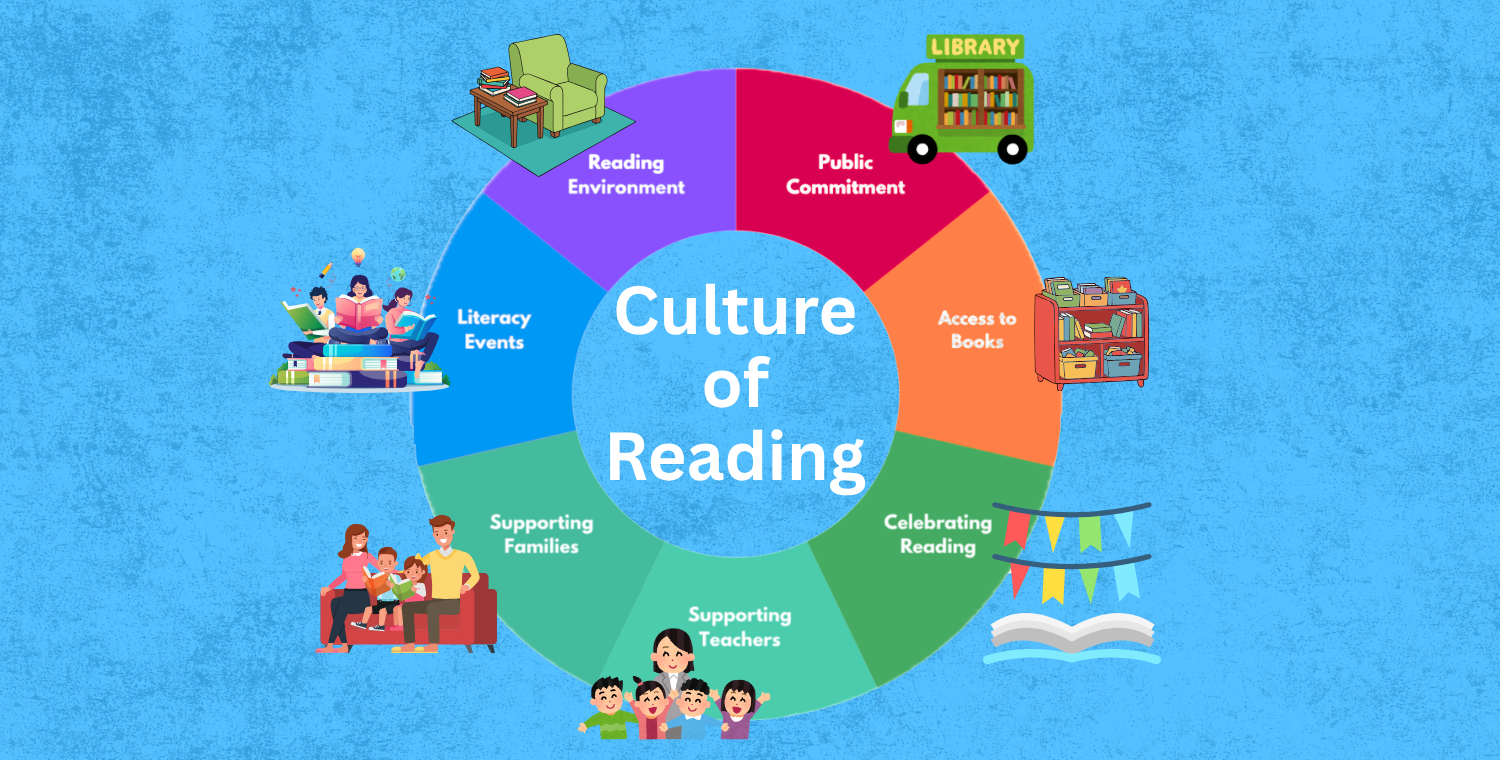
The modern classroom and library landscape is shifting beneath our feet, and educators everywhere are facing a staggering, quiet challenge: the steep decline in reading for pleasure among our students. Because we live in an era dominated by hyper-stimulating algorithms and instant digital gratification, capturing a student’s attention with a print book feels harder than ever before. Establishing a vibrant Culture of Reading is no longer just a luxury or a secondary goal for your school community. Rather, it is an absolute necessity for long-term student success and engagement. When we foster a community that truly celebrates books, we unlock the door to improved academic outcomes, stronger social-emotional health, and a more connected school community.
The Literacy Crisis: Why Reading for Pleasure is Declining
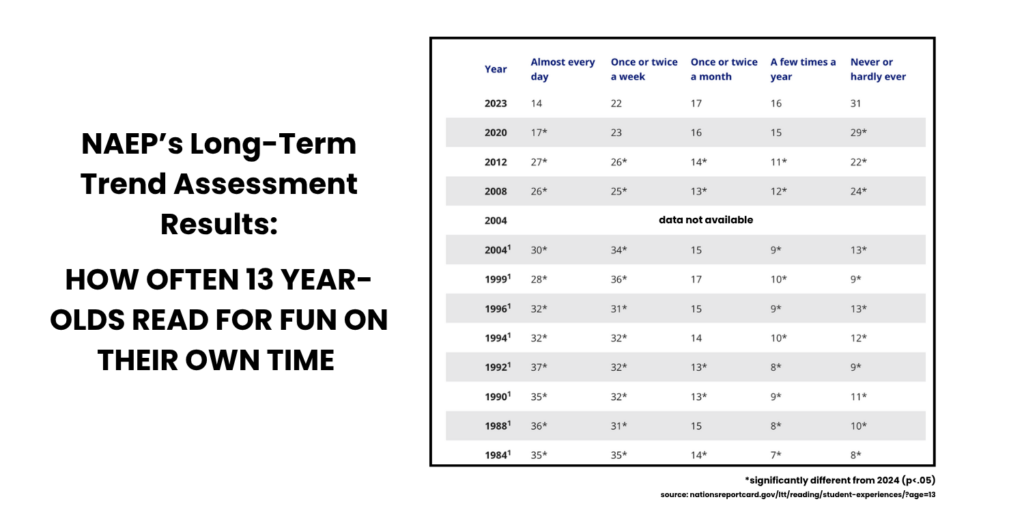
Recent data confirms a stark reading for pleasure decline, with teenage reading habits plummeting to their lowest levels since the mid-1980s. According to the long-term trend data from the National Assessment of Educational Progress (NAEP), the percentage of pre-teens and teenagers who report reading for fun on an almost daily basis has plummeted to the lowest levels recorded since the mid-1980s. Looking even further, the Scholastic Kids & Family Reading Report highlights a sharp decline in reading enjoyment and frequency that begins right around age nine and rarely rebounds without intentional intervention. School librarians and classroom teachers notice the heavy fallout of this decline every single day through lower reading comprehension scores, dwindling vocabularies, and a severe lack of academic stamina across all subjects.
To combat this literacy crisis, many schools fall into a very common trap by attempting to spark a love of books and reading through single, isolated events. Think of the annual Literacy Night, the once-a-year book fair, the spirit week full of dress-up days, themes, and “dress like your favorite character” days. Although these special events are wonderful, fun, and provide temporary excitement, they simply do not change students’ long-term habits or daily motivation. Ultimately, addressing this systematic decline requires more than a temporary spark. It requires a permanent shirt in a school’s environment that transforms the physical and emotional landscape of the school building.
So What IS a Culture of Reading?
A genuine Culture of Reading is much more than a collection of successful events scattered across the school year. At BookBreak, we believe that a true Culture of Reading represents an institutional shift where reading for pleasure moves from a rare, special occasion to an organic experience that students actively look forward to every single day. It is the invisible DNA of a school building, which means it serves as the underlying vibe that shapes how students, staff, and families interact with text. When a Culture of Reading takes root, books and reading become highly visible, deeply valued, and completely normal within the everyday routines.
From a student’s perspective, this environment turns the act of opening a book into a joyful, communal norm rather than an isolated, assigned task. Meanwhile, from the administrator’s angle, cultivating this environment directly supports critical school improvement goals, meets rigorous state standards, and elevates cross-curricular achievement by implicitly building critical thinking skills. When leadership prioritizes this shift, the entire school climate changes because books and reading become the connective tissue that unites everyone from the front office to the back row of the classroom.
Doing Literacy Initiatives vs. Being a Community of Readers
To understand how to build this environment, we must examine the difference between doing literacy initiatives and being a community of readers.
- Doing Literacy Initiatives: This approach is heavily characterized by compliance, transactional behavior, and strict rigid frameworks. For example, schools that are introducing or working on a literacy initiative rely on administering computer-based quizzes and holding mandatory silent reading blocks that feel like tedious chores to struggling readers.
- Being a Community of Readers: A school of readers is defined by their sense of community, authentic connection to books and reading, and transformational experiences. In this environment, classrooms, libraries and families take part in books and reading, share book recommendations, talk about what they are reading and celebrate authors and the writing process.
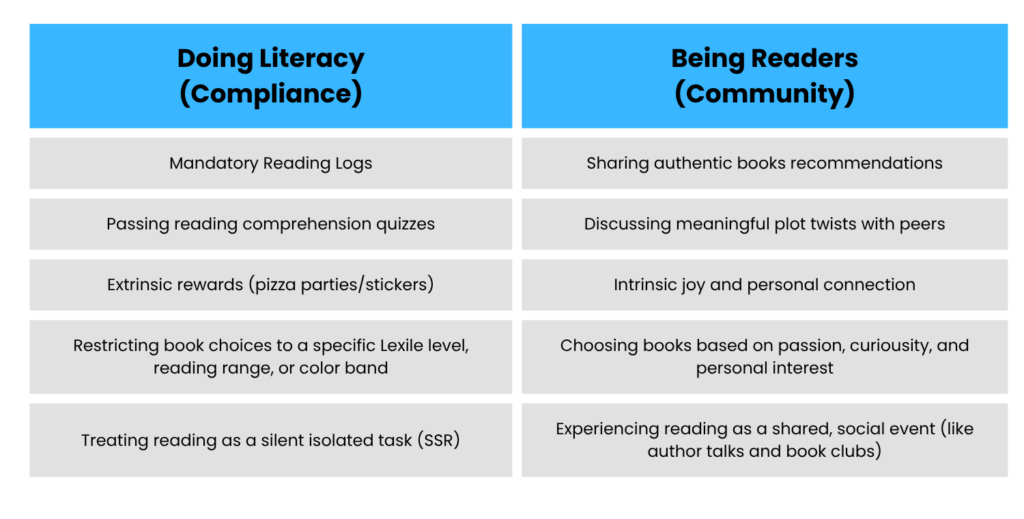
When we make the intentional shift from transactional reading to transformational reading, we stop demanding performance and start inviting exploration.
The Blueprint: 7 Pillars for Building a Culture of Reading
Setting the stage for an all-encompassing institutional change can feel incredibly daunting to an already overwhelmed school staff. Fortunately, this massive shift becomes highly achievable when you break the process down into specific, manageable focus areas. To help you navigate this journey, BookBreak has built a comprehensive blueprint around seven distinct pillars that work together to reshape your school’s ecosystem.
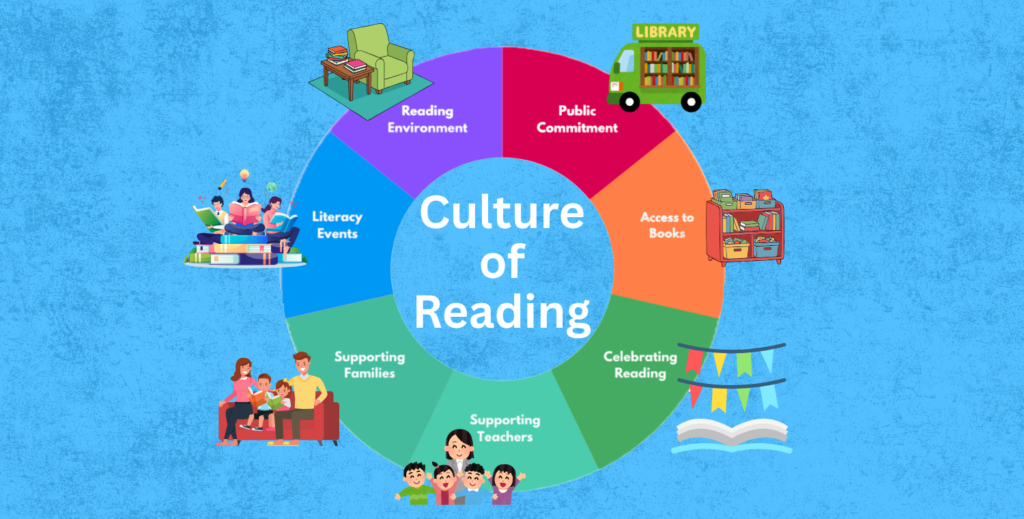
We will explore each foundational pillar in more detail in upcoming blogs. Stay tuned for your guide through the practical steps to master each crucial element and build a sustainable foundation where literacy thrives naturally in your school community.
BookBreak’s Culture of Reading Platform
We know that teachers and school librarians value, and deeply desire, this vibrant environment for your students. You very realistically do not have the time and capacity to make it happen. This is why BookBreak has done the heavy lifting for you with a comprehensive Culture of Reading Platform. We provide an all-inclusive, plug-and-play ecosystem that completely transforms your school’s culture without adding the burden to your educators’ plates.
While we’ve been widely recognized for our virtual author talk series, BookBreak has evolved into a comprehensive literacy suite that actively supports every facet of a Culture of Reading in your school community. You do not need to piece together fragmented programs or scramble for materials. Check out our Culture of Reading page for the full list of tools and resources available.
Bringing a Culture of Reading to Life in Your School
A thriving Culture of Reading never happens by accident or luck. It grows intentionally when dedicated educators, passionate librarians, and supportive administrators work together to make books and reading visible, valued, and celebrated across the entire school community.
Are you ready to move from doing literacy initiatives as a way to check a box to building a community of active, joyful readers with a true Culture of Reading? BookBreak is here to help you transform the invisible DNA of your school. All you have to do is say the word!
Stay Tuned for more on Culture of Reading…