A common misconception is that reading development belongs solely to the English department. School standards experts stated in a report that reading is the central key unlocking the rest of the academic curriculum. To better support student literacy rates, reading must expand beyond the English classroom.
According to the reading engagement model established by Guthrie and Klauda (2016), authentic reading motivation directly produces reading engagement, which subsequently drives higher academic achievement across all disciplines. When a student learns to engage deeply with reading, those cognitive processes spill directly into science labs, math word problems, and complex historical documents. Building a school’s Culture of Reading requires every educator to recognize a simple truth: academic success in any subject is impossible without reading stamina.
Cross-Curricular Reading Options
To integrate literacy across different subject areas, schools utilize several digital resources to cultivate content knowledge and reading stamina:
| Program / Subscription | Primary Focus | Practical Advantage | Core Limitation |
| Discovery Education | Multimedia Content | Offers an extensive, multi-subject media library that embeds reading passages directly into science and math lessons. | Functions primarily as a core instructional tool, lacking a dedicated focus on building individual independent reading routines. |
| ReadWorks | Skill-Based Nonfiction | Provides a vast library of free, curated nonfiction articles designed to build background knowledge in science and history. | Focuses heavily on standard comprehension question sets, which can lean into a traditional, test-prep aesthetic. |
| Gale eBooks | Informational Research | Delivers simultaneous, multi-user access to reference materials spanning geography, science, and technology for research projects. | Acts primarily as a stationary reference database rather than a dynamic experience that boosts daily reading motivation. |
| BookBreak | Experiential Engagement | Links reading directly to STEM, history, and social-emotional learning by showcasing real-world applications of text. | Requires educators to carve out dedicated time for live or on-demand virtual sessions within existing classroom schedules. |
Key Takeaways
- Literacy is Interdisciplinary: Subject-area text demands complex comprehension, making reading stamina essential for success in math, science, and history.
- Motivation Drives Success: When students value reading and believe in themselves, they more willingly engage in complex academic tasks.
- Collaborative School Culture of Reading: True success happens when library professionals, literacy coaches, and teachers partner to celebrate books school-wide to foster a Culture of Reading. BookBreak has it all ready for you!
FAQs
Q: How can a science or math teacher support reading without sacrificing instructional time?
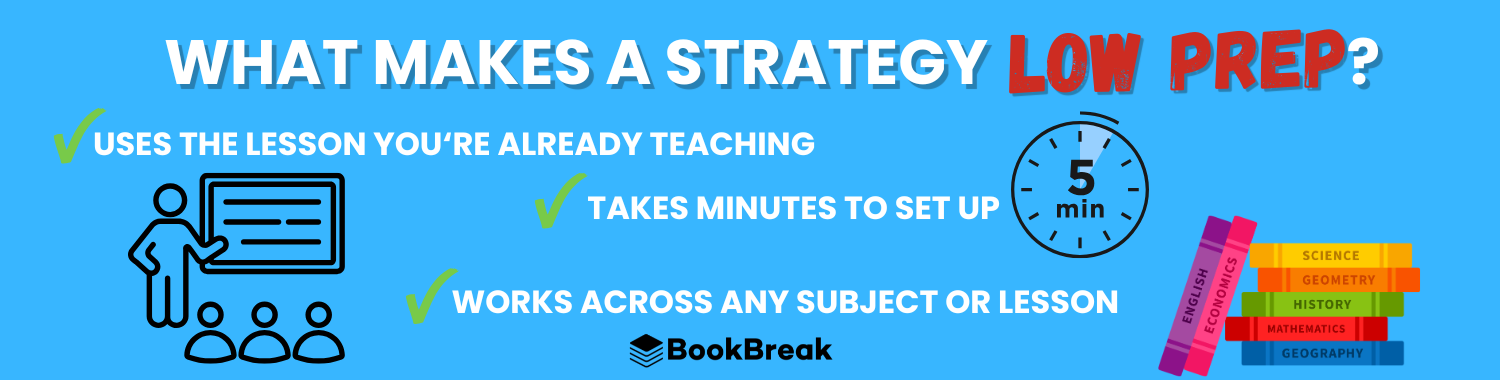
A: Focus on short-form engagement. Introducing quick, open-ended discussion prompts before reading a lab report or source ignites curiosity and builds connection without pulling time away from the core lesson.Q: How can author interactions build cross-curricular connections instead of just focusing on narrative writing?
A: When students hear directly from authors, they gain deep insight into the research process, historical inspirations, and real-world applications for what they are reading.
Stay Tuned…