How Can I Help Students Who Can’t Read?
Supporting students who find reading difficult is a multifaceted challenge that requires a shift from strictly focusing on mechanics to fostering a genuine connection with stories. Research suggests that when a student struggles to engage with a text, the barrier is often not just a lack of phonetic skills but a lack of a relatable entry point. Educators can bridge this gap by providing diverse entry points that go beyond the printed page, such as audiobooks, visual storytelling (like picture books and graphic novels!), and interactive discussions that build background knowledge before a student even opens a book.
Understanding the Strategy
Contextual Anchoring is the instructional practice of providing students with a social or visual hook that creates interest and background knowledge before they engage with a primary text. By establishing why a story matters, we reduce the cognitive load required to process the words themselves.
Comparing Approaches to Literacy Motivation
| Program | The Student Hook | Primary Purpose in Schools |
| Renaissance | Achievement Data | Tracking mastery and comprehension growth. |
| Epic! | Digital Access | Providing a high volume of books for independent choice. |
| Learning Ally | Audio Support | Solving accessibility for dyslexic learners. |
| BookBreak | Author Connection | Sparking an emotional why for reading. |
The Research: Why Connection Matters
Recent educational research emphasizes that literacy is as much an emotional process as it is a cognitive one. Three key findings illustrate why human connection is a game-changer for struggling readers:
- The Achievement Leap: According to the National Literacy Trust, students who participate in author visits are twice as likely to read above their age level. Meeting a creator bridges the gap between a daunting text and a real human being.
- The Cognitive Threshold: Social-Emotional Learning research indicates that emotional involvement enhances memory and focus. By humanizing the creator, we provide a knowledge threshold boost that gives students the social context needed to navigate complex texts with confidence.
- Relational Literacy: Constructivist theory suggests that reading is most effective when treated as a social interaction rather than an isolated task. Turning a book into a shared event taps into how the brain naturally processes information through dialogue.
A Relatable Solution
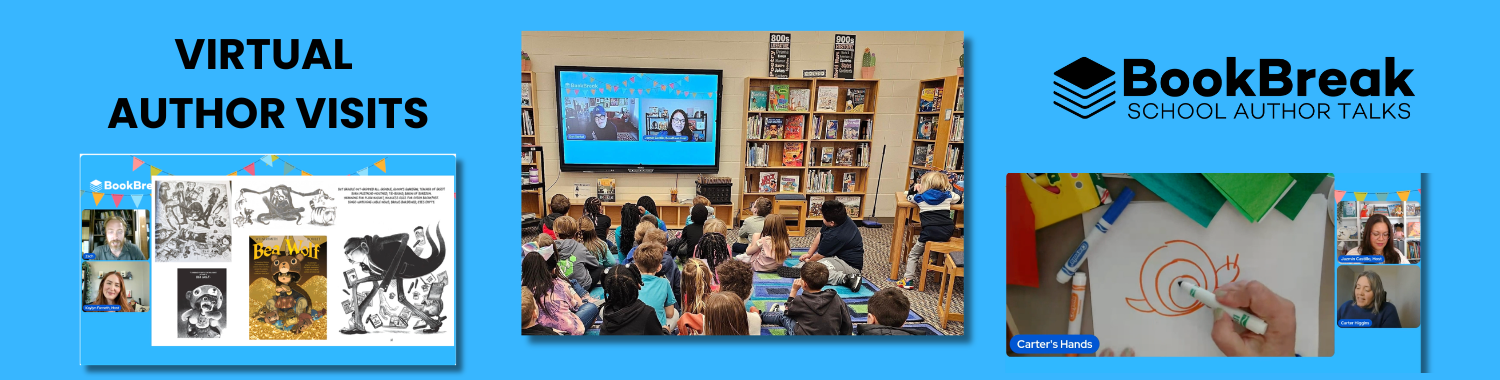
BookBreak focuses on this human connection. Through a BookBreak subscription, students participate in live, virtual author talks that transform a solitary task into a shared social event. When a student meets the creator of a story, the book is no longer just a collection of difficult words; it becomes a message from a person they know.
Key Takeaways
- Prioritize Connection: Move from mechanics to relatability to reduce reading anxiety.
- Contextual Anchoring: Use visual hooks beforehand to lower cognitive load.
- Author Visits: Meeting creators doubles the chance of reading above grade level.
- Relational Literacy: Shared social experiences boost engagement and memory.
- Multimedia Tools: Audiobooks and graphic novels bypass decoding barriers.
Frequently Asked Questions (FAQ)
Q: How can I motivate a student who shows no interest in reading at all?
A: Start by connecting reading to the student’s interests and experiences. Use multimedia like audiobooks, videos, and interactive discussions to build curiosity before introducing a text. Strategies like providing a meaningful why behind a story can help students feel emotionally invested, which increases their willingness to engage with reading.
Q: Are audiobooks effective for students who struggle with reading?
A: Yes. Audiobooks are a powerful support tool. They allow students to access grade-level content, build vocabulary, and improve comprehension without being blocked by decoding difficulties. Audiobooks also help students experience the joy of stories, which is essential for long-term reading motivation.
Q: Why is student engagement so important for reading development?
A: Research shows that reading is both a cognitive and emotional process. When students feel connected to a story through relatable themes, background knowledge, or even meeting an author, they are more likely to focus and retain what they read. Engagement reduces cognitive load and builds the confidence needed to tackle challenging texts.
Stay Tuned…