Students do not come to a text as a blank slate. They bring experiences, ideas, and bits of understanding with them every time they open a book. When teachers tap into this and intentionally focus on building background knowledge, those connections become stronger and more meaningful. As a result, students can link what they already know to new ideas for better reading comprehension.
Students who have strong background knowledge are more engaged, ask better questions, and have better comprehension of new texts. In addition, they become more confident readers because the content feels accessible instead of overwhelming. That is why building background knowledge is the key to better reading comprehension and one of the most powerful moves educators can make before reading even begins.
What is Background Knowledge?
Background knowledge, or prior knowledge, refers to the information, experiences, and understanding that students already have before learning something new. This will include their own experiences, vocabulary, cultural knowledge, and any previous exposure to the topic. In other words, it is everything a student brings with them into a lesson or reading experience.
Even with the knowledge and experiences they do bring, comprehension often breaks down because of what students lack in regard to background knowledge. For example, a student reading about space exploration without any context may struggle to understand key ideas, even if they can decode the words. In this case, building background knowledge about what space exploration entails and taking time to talk about what they already know and what they would like to find out can build a bridge between unfamiliar content and what they already do understand. Then learning is more accessible for all students in the room.
Why Building Background Knowledge Improves Reading Comprehension
Research consistently shows that building background knowledge is one of the strongest predictors of reading comprehension. One well known study is The Baseball Experiment where Recht & Leslie found that “reading ability had little impact on how well kids understood the story” but rather how much they already knew about baseball. “Prior knowledge creates a scaffolding for information” explains Recht and the Baseball Experiment demonstrates that students understand texts more fully when they can connect new information to existing knowledge and experiences.
Here is why it works:
- Improves Understanding: When students recognize concepts or ideas, they can make connections quicker and grasp meaning easier.
- Supports vocabulary development: Students already have some context, so building background knowledge makes new words easier to learn and remember.
- Increases engagement: When a topic feels familiar, students are more likely to stay interested and motivated to keep reading.
- Strengthens critical thinking: When background knowledge is in place, students can ask better questions, make inferences, and form opinions.
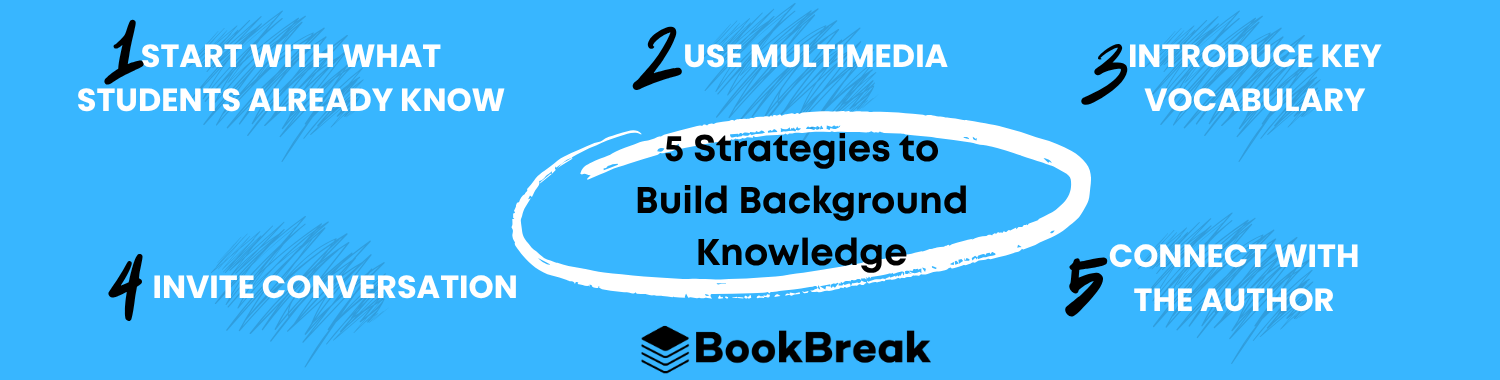
5 Strategies for Building Background Knowledge
Fortunately, building background knowledge to support reading comprehension doesn’t require long, complicated lessons. Small, intentional strategies can make a big difference.
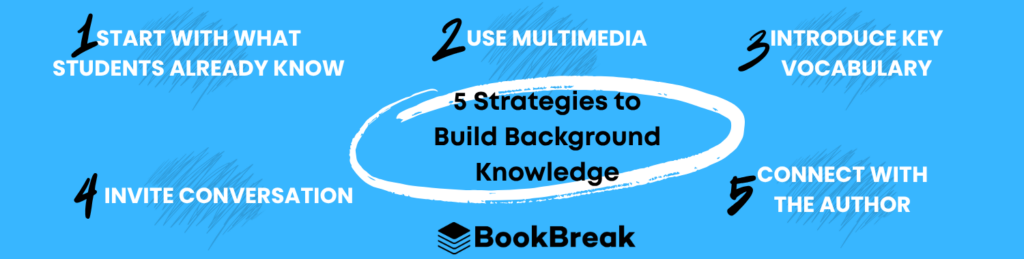
Let’s go back to the example topic of space exploration to show how to use these five strategies.
- Start with what students already know. Begin by asking simple questions like:
- “What do you already know about space travel/space exploration?”
- “What is something you saw or heard recently about Artemis II?”
This activates existing knowledge and helps students feel more confident right away for anything they might know about space and/or the recent Artemis II mission.
- Use multimedia. Images, short videos, photographs, and real-world artifacts, can quickly provide context. For example, showing some recent news coverage on the recent Artemis II mission could help students visualize the topic of space exploration.
- Introduce 3-5 key vocabulary words. Previewing a few important words gives students a foundation to build on. In the space exploration example, introducing words like:
- Orbit
- Astronaut
- Microgravity
- Spacecraft
- Satellite
A preview of these terms will help students feel less lost if they encounter these words in the text.
- Have a conversation. Partner or small group discussions allow students to share experiences and make connections. In our space exploration example, you could have students talk about if they would ever take a one-way trip to Mars or if they would like to walk on the moon. These conversations will help students hear new perspectives, think about the topic a different way, and expand their knowledge.
- Connect students with the person behind the story. Whenever possible, help students learn about the author. Understanding who created the text, and why, adds valuable context and deepens comprehension. In our space example, Leland Melvin is an author who has written both fiction and nonfiction books about space exploration.
Hearing from Authors Strengthens Background Knowledge
One of the most powerful ways to strengthen background knowledge and unlock reading comprehension is to connect students directly with authors. Hearing from the person behind the story gives students insight into the inspiration, historical context, research process, character development, and world-building that are involved in the writing process.
This is where BookBreak supports educators! Through virtual author visits, students don’t just read a book, they experience the story behind it. This leads to understanding the deeper meaning and intent of what they are reading.
Explore how this works through BookBreak’s wide range of author experiences at [insert link].
When students understand what went into creating a story, their natural curiosity takes over. That curiosity drives engagement, which ultimately supports stronger reading comprehension and a more meaningful reading experience.
Bringing It All Together
The good news is that building background knowledge to unlock comprehension does not have to be time-consuming or complicated. In fact, even just a few intentional minutes before reading can make a noticeable difference in how students engage with a text.
Start small. Be intentional. Use simple tools like discussion prompts, visuals, and short video clips. When possible, bring in the author’s voice to deepen understanding and spark curiosity.
You’ll see these strategies help students approach reading with confidence and a stronger foundation for comprehension. Then you’ll start to see better, more motivated readers.
Stay Tuned…